₹2,950. That charge lands on an HDFC Regalia Gold statement on the card's anniversary unless ₹4 lakh went through the card in the year before, per cardadvisor.in's Regalia Gold page (updated 1 October 2026). Divide one by the other and the credit card annual fee waiver is worth 0.74% of the spending it asks for. The SMS saying you're short feels like a deadline. The arithmetic decides whether it is one.
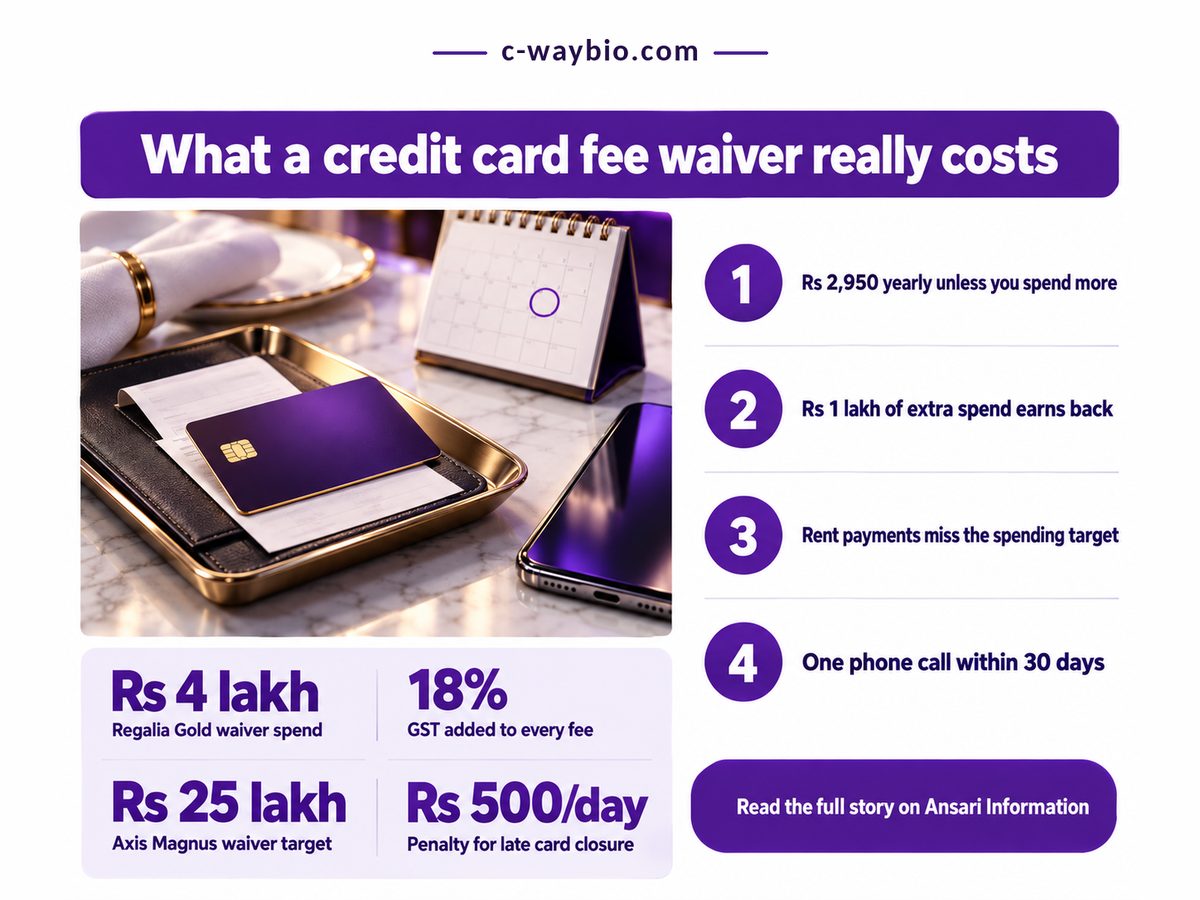
Key Takeaways: chase the waiver only with bills you already pay; otherwise pay the fee if you use the perks, or downgrade to a no-fee card.
- Treat a waiver as a discount of 1% or less on extra spending.
- Moving real bills wins unless the card they leave returns over about 3.3%.
- Rent, wallet loads and gaming do not count on Regalia Gold.
- If the fee posts, dispute it early; close if refused.
What is a credit card annual fee waiver really worth?
A waiver is worth the fee divided by the spend target, which on five popular Indian cards works out to between 0.30% and 1.18% of the money you must put through the card.
The rest of the sum, GST included, from cardadvisor.in's fee-waiver guide (updated 10 August 2026). Check each against your bank's MITC, the binding fee schedule.
- HDFC Millennia: ₹1,180 waived at ₹1 lakh of spend, so 1.18%.
- HSBC TravelOne: ₹5,899 waived at ₹8 lakh, so 0.74%.
- SBI Card Elite: ₹5,899 waived at ₹10 lakh, so 0.59%.
- Axis Bank Airtel: ₹590 waived at ₹2 lakh, so 0.30%.
Now the other half. Since 15 May 2026, Regalia Gold earns 5 reward points per ₹200, down from 4 per ₹150; a point fetches ₹0.15 to ₹0.20 as statement credit or ₹0.50 on SmartBuy flights. Say you are ₹1 lakh short with a month to go. Closing the gap earns 2,500 points, worth ₹375 to ₹1,250. Add the fee you keep and the move is worth ₹3,325 to ₹4,200, or it would be, if that lakh is money you were spending anyway. As with the post-tax gap between an FD and a debt fund, the headline number is not the one you keep.
This site's line, from its own sum: if the lakh comes off UPI or a debit card, chase every time. If it comes off another credit card, chasing still wins unless that card returns more than about 3.3%, where its lost rewards eat the ₹3,325 floor. If it is shopping you would not otherwise do, you have spent a lakh to save about 3% of it. "Just hit the target" is backwards advice for anyone buying things to get there.
Four more numbers decide whether that sum is open to you at all. GST inflates every quoted fee, much as it once shaped whether to renew or port a health policy.
TravelOne Counting Switch
July 2026
Card year, not 1 April
GST on a ₹4,999 Fee
₹900
May stay after a reversal
Axis Magnus Waiver Target
₹25 lakh
Twelve big months, every year
GST on Every Annual Fee
18%
Quoted fees understate the bill
The counting switch bites hardest. A TravelOne holder tracking from the financial year's start is measuring the wrong twelve months, and a gap that looked comfortable can close weeks early.
Axis Magnus wants ₹25 lakh a year before it forgives its fee. That is not a target most households can reach with bills they already pay.
Is it worth paying a credit card annual fee?
Paying is worth it only when the perks you actually used this year, lounge visits or milestone vouchers, are worth more than the fee; chasing wins when eligible bills can close the gap.
| Dimension | Chase vs Pay | What it means for you |
|---|---|---|
| 💰 Net this year | Chase Up to ₹4,200 ahead Pay Fee gone, perks kept |
✅ Moved bills make the waiver pay |
| 📊 Points on gap | Chase 2,500 on ₹1 lakh Pay Only on usual spend |
⚠️ Redeem on flights, not as cash |
| 🧾 Eligible spend | Chase Rent, wallets, gaming out Pay Nothing to track |
❌ Rent cannot buy this waiver |
| ⏱ Counting window | Chase Card year, not April Pay Fee hits on anniversary |
⚠️ Count from your card's start month |
| 🔋 Big targets | Chase Magnus: ₹2.08 lakh a month Pay ₹14,750 a year |
❌ Few homes can move that much |
| ⚖️ Fee rise | Chase 30 days' notice first Pay Exit without charge |
✅ A higher target is your exit door |
| 🏁 Best suited for | Chase Gaps you fill with bills Pay Perks worth over the fee |
🏁 Neither? Downgrade to a no-fee card |
If neither column fits your year, ask for a product change to a no-fee card before the anniversary; a downgrade usually keeps your credit line and history, which closing does not. The fee-rise row rests on the RBI's Master Direction on Credit and Debit Cards (clauses 24(c) and 30).
If the waiver is out of reach, this settles when to act: dispute the fee inside the first month, and if refused, close before the next fee with the regulator's clock on your side. Source: RBI Master Direction, clause 8(a), and cardadvisor.in's fee-waiver guide for the call window.
Does rent count towards the annual fee waiver?
No, not on Regalia Gold: rent, wallet loads, online gaming, third-party education payments and utility bills beyond ₹50,000 are excluded from the spend that earns the waiver, and insurance counts only up to a cap.
That kills the popular shortcut of routing rent through a payment app. The honest route is spending you now make from a bank account, such as groceries and pharmacy bills; first check who actually pays UPI transaction charges. Pulling forward a purchase already decided, like a phone upgrade timed around smartphone launch prices in India, is fine. Inventing one is not.
Can I close my credit card to avoid the annual fee?
Yes, and once dues are cleared the RBI's Master Direction on Credit and Debit Cards obliges the bank to close the card within the deadline shown above, or pay you a penalty for each day of delay.
Should you? Closing is the blunt tool; a downgrade is sharper. One grey area remains, and this is opinion: whether a bank may keep the GST on a fee it reversed. The RBI bars undisclosed charges, but MITC wording decides the tax.
- A reversal needs your spend records; GST returns only if the MITC says "annual fee including applicable GST".
- Add-on spend counts only where the MITC says "total eligible spend across primary and add-on cards", letting a spouse's groceries close the gap.
- Your spreadsheet may count from 1 April; the bank may count from the anniversary.
Check these before your card anniversary
- Bills you already pay from a bank account can fill the gap.
- None of them is rent, a wallet top-up or gaming.
- No other card you hold returns over about 3.3% on them.
- Perks you used this year beat the fee.
Stay or switch? Stay and chase if the first three boxes are ticked. Stay and pay if only the fourth is. Tick none and switch: ask for a downgrade to a no-fee card, and close only if the bank refuses. This week, open your card's MITC, find the waiver clause and anniversary date, and total your eligible spend since then.